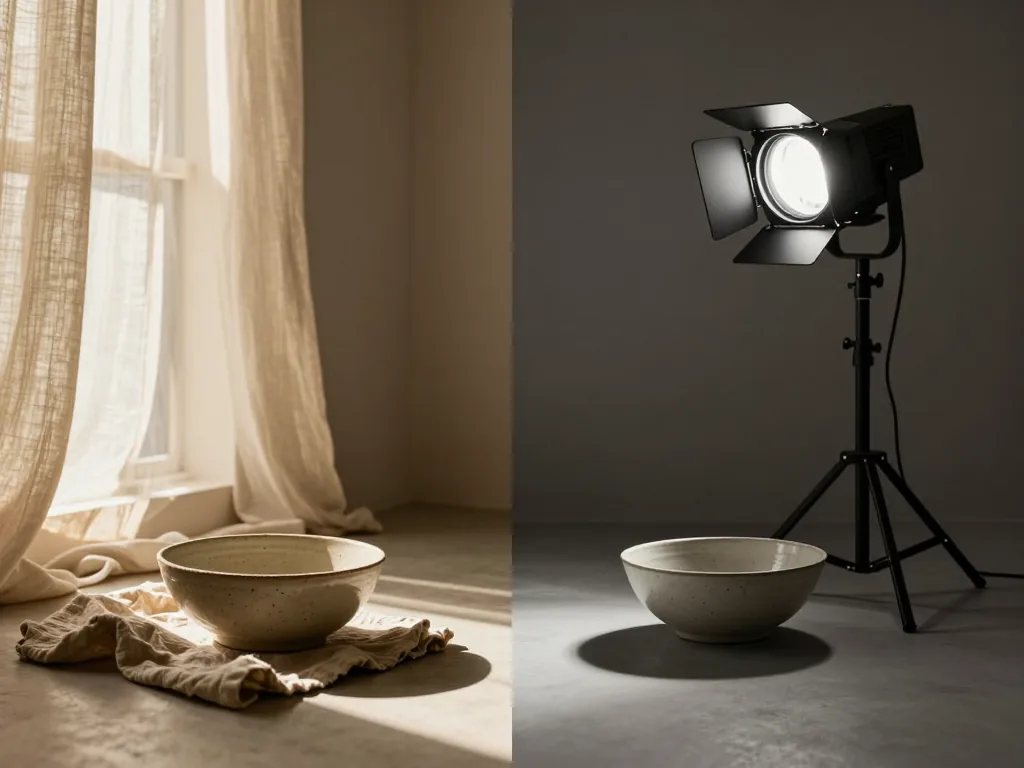
Natural Light Versus Flash The Great Photography Showdown Where Nobody Gets Sunburned
Natural light vs. flash: pick your champion! Sunbeams or strobes—learn when each shines (and when they don’t) without frying your subject.
Every photographer has faced the great natural light versus flash showdown. It usually ends with someone squinting like a mole who just got evicted from their burrow. Natural light is the free-spirited friend who shows up uninvited but always flatters you. Flash, on the other hand, is the overeager relative who insists on taking control of the room—sometimes brilliantly, sometimes with the subtlety of a paparazzi at a library. This guide settles the debate once and for all. We’ll break down when to let the sun do the heavy lifting and when to unleash your strobe like a tiny, well-behaved lightning bolt. By the end, you’ll know exactly which tool saves your shot—and your skin—without ever needing SPF or a welding mask. Think of it as a referee’s whistle for your camera bag. Minus the actual whistle, because nobody wants to hear that.
What Is the Difference Between Natural Light and Flash
Natural light is the sun doing its thing while you just stand there, while flash is a controlled burst of photons you unleash like a tiny lightning god. Think of it as the difference between a lazy Sunday brunch and a barista who nails your exact latte order every time. Both can make you look fantastic, but they demand wildly different game plans.
Why Natural Light Is Like a Free All-You-Can-Eat Buffet
Natural light costs nothing, never runs out, and shows up in endless flavors—golden hour’s honey glow, the soft diffused blanket of an overcast sky, or the harsh noon spotlight that turns everyone into a witness in a crime documentary. You can’t tweak the menu, but you can shuffle your plate. Step closer to a window, angle your subject toward the glow, or press a white wall into service as a bounce card. It’s forgiving, flattering, and keeps skin looking like skin, not polished plastic.
The catch? You don’t run the kitchen. Clouds roll in, shadows creep, and that perfect window light vanishes right as you’ve nailed the frame. When the sun goes into hiding, your “free buffet” becomes a sad vending machine stocked with expired snacks. That’s when you shoot fast, work in bursts, and embrace the mess. Natural light rewards patience and sharp eyes—you’re less a photographer and more a weather detective with a camera. For portraits, still lifes, or any scene craving organic, unforced realism, it’s unbeatable. Just remember: the sun isn’t on your payroll, so don’t gripe about its hours.
How Flash Works Like a Pocket-Sized Sun You Can Boss Around
Flash is the obedient, slightly overeager assistant who never calls in sick. Press a button, and it fires with the reliability of a metronome—no mood swings, no schedule, no begging for a clear sky. Bounce it off a ceiling to soften it, diffuse it with a little plastic dome, or set it to fill in shadows that natural light leaves behind like an untidy roommate. It’s the difference between waiting for the universe to cooperate and simply deciding the universe will look this way, thank you very much.
But here’s the honest truth: flash isn’t subtle by default. Point it straight at your subject and you’ll get that deer-in-headlights stare, complete with a harsh black backdrop screaming “1990s school photo.” The trick is to treat flash as a sidekick, not a replacement. Use it to add a sparkle to the eyes, freeze motion in a dark room, or balance a backlit scene where the sky blazes but your subject is a silhouette. When natural light throws in the towel—indoor events, night streets, or a basement that hasn’t seen sunshine since the Clinton administration—flash is your lifeline. It’s a tool for control freaks, and that’s a compliment.
The Color Temperature Tug-of-War and Why Your Whites Look Weird
Here’s where things get sneaky. Natural light isn’t one color—it shifts from warm orange at sunrise to cool blue in the shade, and your camera’s white balance has to play catch-up. Flash, meanwhile, is calibrated to a neutral daylight standard, which works fine until you mix it with tungsten bulbs that glow like a campfire. The result? Your whites turn yellow, your skin goes green, and you start questioning every life choice that led you to this moment.
The fix is simpler than you’d think:
- Set your white balance manually based on your dominant light source, not the one you wish you had.
- If you’re mixing flash with ambient light, use a gel on the flash to match the room’s color temperature—orange for warm bulbs, green for fluorescent tubes.
- Shoot in RAW so you can adjust the temperature in post without wrecking your image quality.
Once you grasp that light has moods, not just brightness, you stop fighting it. Natural light hands you a palette; flash gives you a paintbrush. The real skill is knowing when to let the sun have its say and when to interrupt with your own version of the truth. Neither is superior—they’re just different flavors of “please don’t make me look like a ghost.” For the classic natural light versus flash debate, the answer is rarely either/or. It’s about reading the scene, respecting the light you’ve got, and then deciding whether to improve it or embrace it.
When Should You Use Natural Light Instead of Flash
Sometimes the best light is the one you didn’t have to carry. Natural light is free, flattering, and never blinds your subject mid-sneeze. The trick is knowing when to let the sun do the heavy lifting and when to tell your flash to sit this one out.
Golden Hour Glory and Why Your Camera Falls in Love at Dusk
If natural light were a person, golden hour would be its charm school graduate. That warm, low-angle glow turns ordinary faces into Renaissance paintings and makes even a parking lot look vaguely romantic. Your camera’s sensor basically sighs with contentment. During the hour after sunrise and the hour before sunset, shadows get long and soft, colors deepen, and skin tones take on that honeyed quality no filter can fake. You want to use this light for portraits, landscapes, and anything where mood matters more than clinical accuracy.
But golden hour isn’t just about pretty colors—it’s about direction. Because the sun sits low, you can shoot with it behind your subject for a glowing rim light, or use it from the side to carve out cheekbones and jawlines. Flash at this time often fights the warm tones, adding a cool, flat blast that kills the vibe. The only real downside is the window is short, so you’ll move fast. If you miss it, you’re not doomed—you’re just back to harsh midday sun, which is when flash actually earns its keep as a fill light rather than a primary source.
Documentary and Travel Shots Where Flash Would Ruin the Vibe
Walk into a bustling market or a quiet temple, and the last thing you want is a pop of artificial light announcing your presence like a party horn at a library. Documentary and travel photography thrive on authenticity—the real shadows, the actual color of a lantern, the way a room feels at 3 p.m. Flash flattens that texture and makes every scene look like a police lineup. Natural light preserves the atmosphere, letting you capture the grime, the glow, and the honest contrast of a place.
That doesn’t mean you shoot blind. You’ll need to work with what’s there: open windows, doorways, reflective walls, and even a white shirt can bounce light where you need it. Raise your ISO, slow your shutter (if your subject stays still), and brace yourself like you’re holding a cup of hot coffee on a bumpy bus. The payoff is that your photos feel like memories, not staged events. Flash, in these settings, often announces you as a tourist with a badge—and the locals will either pose stiffly or scatter. Natural light keeps you invisible, which is exactly how you get the shot nobody knew you took.
| Lighting Situation | Natural Light | Flash | Best Choice |
|---|---|---|---|
| Golden hour portrait | Warm, flattering | Washes out tones | Natural |
| Busy street market | Authentic mood | Alters scene | Natural |
| Midday harsh sun | Hard shadows | Fills in faces | Flash (fill) |
| Indoor party at night | Dim, noisy | Crisp, controlled | Flash |
| Museum or church | Respectful, quiet | Often banned | Natural |
Shooting Kids and Pets Without Making Them Squint Like They Just Saw a Ghost
Kids and pets have two things in common: they never sit still, and they hate bright flashes. That direct burst of light doesn’t just startle a toddler—it makes a dog look at you like you’ve insulted its ancestors. Natural light is the gentler path. Put the little humans or furry beasts near a large window, and you get soft, directional illumination that catches their expressions without triggering a blink-and-miss moment. You’ll also avoid the dreaded red-eye, which turns every cute face into a horror movie extra.
The catch is speed. Natural light means you’ll often shoot at wider apertures and higher ISOs, so your autofocus needs to be on point. Try shooting in burst mode and tracking their movement—then pick the sharpest frame where the tongue is out or the giggle is real. Flash, even with a diffuser, tends to freeze a moment but not the spirit; kids sense it and stiffen, pets just leave. So when you’re chasing a two-year-old with a toy truck or a cat mid-yawn, slide the window open, drop the blinds to soften, and let the sun do the parenting. Your subjects will thank you with actual smiles, not squints.
When Should You Use Flash Instead of Natural Light
Natural light is a wonderful, free, and flattering friend—until it isn’t. The moment your subject decides to become a blur, the room turns into a cave, or you need every shot to look like it came from the same photographic universe, flash steps in like a slightly pushy but very helpful cousin. Here’s how to know when to let the flash take the wheel, without turning your portrait into a deer-in-headlights situation.
Freezing Motion When Your Subject Moves Faster Than Your Shutter Speed
You know that feeling when you try to photograph a toddler mid-sprint or a dog shaking off water, and the result looks like a ghost with a head? That’s your shutter speed waving a white flag. Natural light can’t stop time—it just illuminates it. Flash, on the other hand, is a lightning bolt you control. A burst of flash, even at a modest power, freezes action because its duration is often far shorter than your shutter speed (think 1/1000th of a second or faster). This is why sports photographers, pet photographers, and anyone chasing hyperactive relatives keep a flash handy.
The trick isn’t to blast your subject into oblivion. Use flash as a fill or a main light with a fast sync speed, and you’ll get crisp, sharp edges on motion that natural light would smear. For example, photographing a dancer mid-leap in a dim studio: natural light gives you artistic blur, but flash gives you every finger and toe in perfect focus. Just remember to dial down the power if you’re close—nobody wants to be the person who temporarily blinds a ballerina.
Short flash bursts freeze motion better than any lens or prayer; your shutter speed just sets the stage, but the flash writes the script.
Indoor and Low-Light Situations Where Natural Light Gives Up on You
There comes a moment in every dimly lit living room, restaurant, or basement bar when natural light throws its hands up and says, “I’m done.” The result is grainy, yellow, and sad—like a photo taken through a buttered window. That’s when flash stops being a choice and becomes a rescue operation. Indoors, especially with ceilings that aren’t white or windows that face the wrong way, bouncing a flash off a wall or ceiling gives you clean, even illumination that no amount of ISO cranking can match.
The key is to use flash not as a direct blast but as a bounce. Point it at the ceiling or a nearby white wall, and you turn the entire room into a softbox. This works wonders for family gatherings, food shots, or catching your cat doing something vaguely illegal at 10 p.m. Natural light in these situations is often either too weak or too orange from tungsten bulbs. Flash, when tamed with a diffuser or bounce card, gives you neutral colors and a sense that you actually know what you’re doing.
Studio and Event Work When You Need the Same Light Twice in a Row
Natural light is a moody artist—it changes with clouds, curtains, and the Earth’s rotation. If you’re photographing a product catalog, a corporate headshot, or a wedding where the couple wants every groomsman to look equally lit, you need consistency. Flash is the reliable friend who shows up on time and doesn’t decide to take a nap behind a passing storm. In a studio, off-camera flashes let you sculpt light exactly the same way for shot after shot, which is a godsend when you’re shooting 50 identical mugs for an e-commerce site.
For events, think of flash as your insurance policy. You can’t control whether the venue’s chandeliers flicker or the sun dips behind a skyscraper, but you can control a speedlight on a stand. Here’s a quick checklist for event flash work:
- Use a diffuser or bounce to keep skin tones soft.
- Set your flash to manual or TTL and test a few frames first.
- Keep a spare set of batteries—flash eats them like popcorn.
- Position your flash high and at a 45-degree angle to avoid flat, boring light.
That consistency is the reason wedding photographers carry multiple flashes: they need the same light for the cake cutting as they did for the first dance. Natural light is lovely for a single golden hour shot, but when you need ten identical portraits in a row, flash is the only thing that won’t ghost you.
How to Combine Natural Light and Flash Without Looking Like a Christmas Tree
Mixing sunlight and flash is a bit like introducing your cat to a new dog—there will be some hissing, a lot of awkward staring, and if you do it wrong, someone ends up hiding under the sofa. But when they finally get along, the result is pure magic: you get the warm, flattering glow of the sun and the crisp, controllable pop of artificial light. The trick is making them look like they’ve been best friends forever, not like two strangers who showed up to the same party in matching neon outfits.
Fill Flash 101 or How to Tame Harsh Midday Shadows
Ah, noon. The time when the sun is directly overhead and everyone’s face looks like they’ve just been interrogated by a very bright lamp. Those raccoon-eye shadows under the eyes and the hard line across the neck are nature’s way of saying, “I’m not trying to help you.” This is where fill flash struts in like a tiny, well-mannered superhero. The idea is simple: use flash at a low power to fill in the shadows without overpowering the sun. You want to lift the darkness, not replace daylight entirely.
Set your flash to manual or TTL and dial it down by one to two stops below the ambient exposure. For example, if your camera reads 1/125s at f/8 for the sunlit background, your flash should be spitting out just enough light to open up the shadows on your subject’s face. The result is a portrait that looks natural, with visible catchlights in the eyes and no angry black triangles under the nose. Think of it as adding a teaspoon of sugar to your coffee—you don’t want to taste it directly, but you’ll sure miss it when it’s gone.
- Use a flash diffuser (like a small softbox) to soften the light further.
- Start with flash power at 1/4 or 1/8 and adjust from there—too little is better than too much.
- Check your histogram: you want the face to be bright but not blown out.
- Keep the flash close to the lens axis to avoid weird side shadows.
Balancing Ambient Exposure With a Flash That Knows Its Place
Now that you’ve tamed the shadows, you need to make sure the flash doesn’t suddenly decide it’s the star of the show. Balancing ambient exposure with flash is about setting your camera for the background first, then letting the flash do its quiet job on the subject. Expose for the sky, fire a full-power flash, and you’ll get a perfectly exposed sunset behind a ghost-white face that looks like it’s been dipped in chalk. Not ideal.
The workflow is simple: meter the ambient light for the scene you want (maybe underexpose it slightly for mood), then adjust your flash power to properly expose your subject. This is where high-speed sync (HSS) becomes your best friend—it lets you use flash at shutter speeds faster than the normal sync limit, which is essential for wide-aperture shots in bright sunlight. Without HSS, you’re stuck at 1/200s or so, which might force you to close the aperture and lose that beautiful background blur. With HSS, you can shoot at 1/1000s at f/2.8, and the flash will still freeze the action without looking like a car headlight.
The secret to natural-looking flash is to make the light look like it came from somewhere else—usually the sun, a window, or a very cooperative lampshade.
Diffusers, Bounce Surfaces, and Off-Camera Tricks for a Natural Look
Direct flash on camera is the photographic equivalent of shouting your opinion in a library—it works, but nobody’s happy about it. To get that soft, window-light feel, you need to diffuse or bounce. A simple diffuser (like a softbox or a small umbrella) spreads the light over a larger area, making shadows gentler and highlights more forgiving. If you’re using a speedlight, pop it off the hot shoe and hold it at an angle, or use a trigger to place it anywhere you like. Off-camera flash is the difference between a mugshot and a portrait.
Bouncing is another trick: aim your flash at a white wall or ceiling, and the light will bounce back down like a gentle, indirect rain instead of a direct downpour. Colored walls will tint your subject, so stick to white or neutral surfaces. If you’re outside with nothing to bounce off, use a reflector (or even a white t-shirt) to fill in shadows naturally. The goal is to have your flash play the role of a helpful friend, not a spotlight operator. When you get it right, nobody will ever guess you used flash at all—they’ll just think you have impeccable timing and a very flattering sun. And that, my friend, is the best kind of photography magic: invisible effort, visible glow.
The Final Verdict: Pick Your Poison, Er, Light
So, decision time. Natural light? That’s the free-range, organic kale of photography—gorgeous, flattering, and completely at the mercy of whatever mood the weather’s in. Flash? It’s your reliable, slightly bossy espresso shot. It shows up, does the job, and doesn’t care if the sun has already clocked out. The real trick isn’t picking a side like it’s some sports rivalry. Your camera’s not loyal. It just wants results. Golden-hour portraits or moody window-side still life? Let the sun earn its keep. Stuck at a party, indoors, or anywhere that looks like a cave after a power outage? Don’t be shy—pop that flash, then tame it with a diffuser or bounce card. Here’s your homework: shoot the same subject twice, once with each light source, and compare the outtakes. You’ll see the whole debate isn’t a showdown at all. It’s a toolbox, and you’re holding the wrench. One last thing: neither will give you a sunburn, but one might make your aunt’s forehead gleam like a disco ball if you’re not careful.